
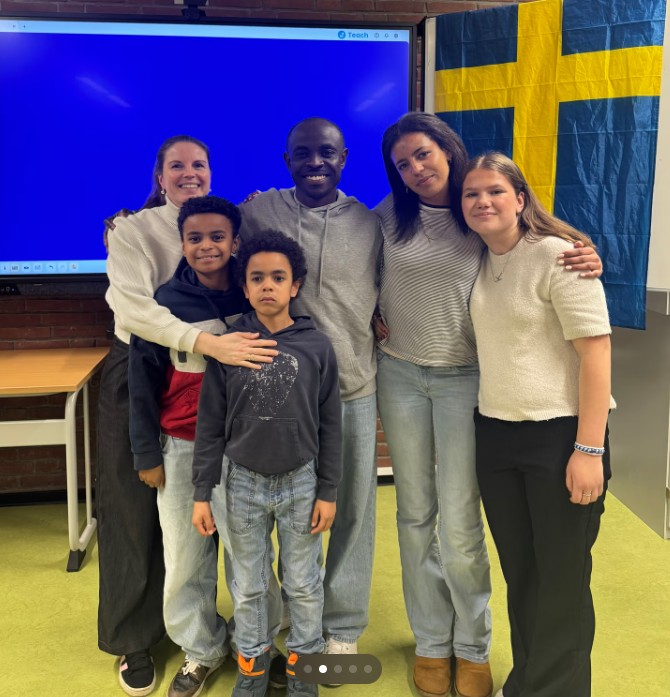
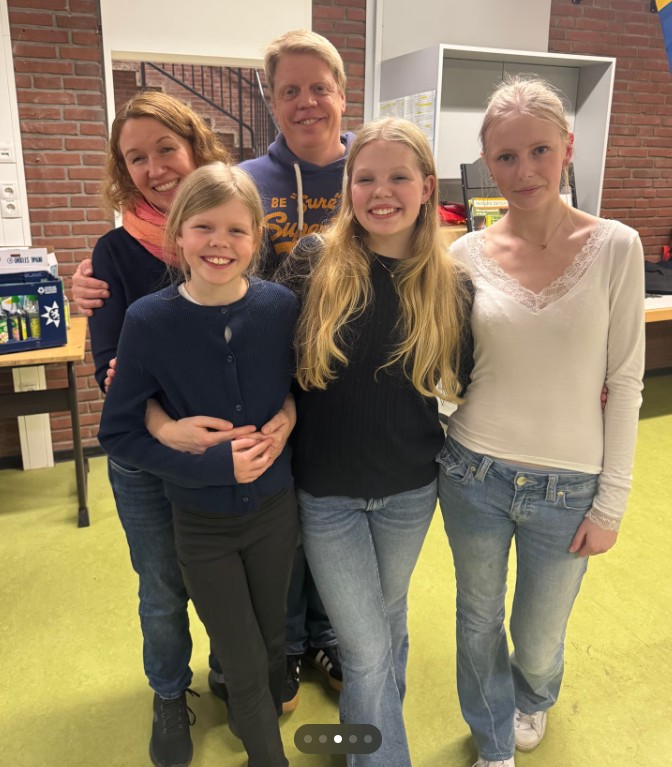
Im Rahmen des Erasmus+-Projekts „AI & Us“ (11 Schülerinnen und Schüler aus den Klassen 7–9) durfte die Johannes-Brahms-Schule vom 21. bis 28. Februar 2026 zehn schwedische Schülerinnen und Schüler der Önneredsskolan zu einer internationalen Projektwoche begrüßen. Die Jugendlichen im Alter von 13 bis 15 Jahren arbeiteten eine Woche lang kollaborativ in internationalen Teams an der Frage, wie Künstliche Intelligenz unseren Alltag, die Medien und die Gesellschaft beeinflusst.
Das Projekt wurde im Rahmen eines eTwinning-Projekts durchgeführt und von Schülerinnen und Schülern des AI Clubs der Johannes-Brahms-Schule mitgestaltet. Gemeinsam entwickelten die deutschen und schwedischen Jugendlichen Ideen, tauschten Perspektiven aus und arbeiteten intensiv an gemeinsamen digitalen Projekten.
Zu Beginn der Woche lernten sich die Teilnehmenden bei einer Schulführung und verschiedenen Kennenlernaktivitäten besser kennen. In internationalen Teams entwickelten sie anschließend Ideen für Podcast-Episoden rund um das Thema KI. Unterstützt wurden sie dabei vom Medienpädagogen Johannes Karstens des "Offener Kanal Kiel". In einem Workshop lernten die Schülerinnen und Schüler, wie man einen Podcast plant, ein Skript erstellt, Interviews führt und Audioaufnahmen professionell bearbeitet. Außerdem konnten sie verschiedene KI-Tools für die Medienproduktion ausprobieren.


Ein wichtiger Bestandteil der Projektwoche waren auch Exkursionen nach Hamburg. Die Gruppe besuchte das Artificial Intelligence Center Hamburg (ARIC), wo die Schülerinnen und Schüler Einblicke in aktuelle Anwendungen und Entwicklungen im Bereich der Künstlichen Intelligenz erhielten.

Ein weiteres Highlight war der Besuch im Miniatur Wunderland. In der Stadt sammelten die Jugendlichen außerdem sogenannte Soundscapes – typische Geräusche aus dem Hamburger Hafen oder der Innenstadt – und führten kurze Interviews mit Passanten. Diese Aufnahmen wurden später in ihre Podcasts integriert.
Auch Medienkompetenz und kritisches Denken standen im Fokus der Woche. In einem Workshop der Organisation Lie Detectors mit der Journalistin Stefanie Hellbig beschäftigten sich die Schülerinnen und Schüler mit Themen wie Fake News, Desinformation und KI-generierten Inhalten.
Die Organisation Lie Detectors führt Medienkompetenz-Workshops an Schulen durch und unterstützt Schülerinnen und Schüler dabei, Informationen im Internet kritisch zu hinterfragen und Desinformation zu erkennen. In diesem Zusammenhang lernten die Teilnehmenden auch, wie man Quellen überprüft und Informationen im Netz kritisch bewertet.


Ein weiterer Programmpunkt führte die Gruppe an die Fachhochschule Wedel. Dort erhielten die Schülerinnen und Schüler spannende Einblicke in Robotik, künstliche Intelligenz und Virtual-Reality-Technologien.


Neben den fachlichen Inhalten spielte auch der interkulturelle Austausch eine große Rolle. Die schwedischen Gäste lebten während der Woche bei deutschen Gastfamilien und konnten so den Alltag in Deutschland kennenlernen. Gleichzeitig entstanden neue Freundschaften und viele spannende Gespräche über Schule, Medien und das Leben in beiden Ländern.
Am Ende der Woche präsentierten die internationalen Teams ihre fertigen Podcast-Episoden und zeigten außerdem einen kurzen Film über die gemeinsame Projektwoche – eine schöne Erinnerung an viele intensive Lernmomente, neue Erfahrungen und eine großartige deutsch-schwedische Zusammenarbeit.


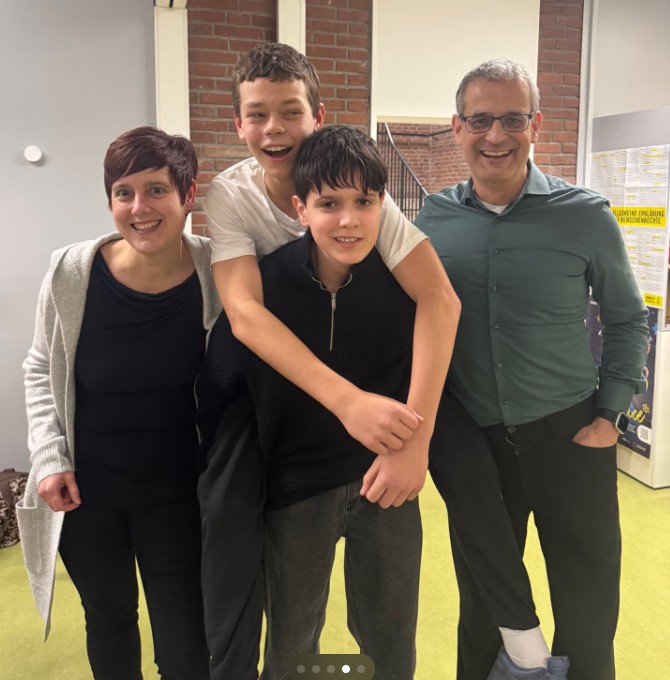

Die Projektwoche war für alle Beteiligten eine bereichernde Erfahrung und hat eindrucksvoll gezeigt, wie digitale Bildung, Medienkompetenz und internationaler Austausch miteinander verbunden werden können.
Testimonials der Schülerinnen und Schüler, die am Projekt beteiligt sind.
"During the time the Swedish Students have been in Germany, my exchange Student told me some differences between Germany and Sweden. First: The Swedish Students call their teacher by their first name. So they don't say Mr. ....or Mrs.... They just say as example: Frederik. Second: They are allowed to use their phones at school, so they have to give them to their teachers before every lesson, but they are allowed to use them during the breaks.Third: They almost only pay by card, nobody really pays with cash anymore and many stores don't even take cash. Fourth: The Swedish Schools barely have any clubs like Drama or Orchestra. So there are some really interesting differences, but all in all, Sweden is pretty similar to Germany and I'm already very excited to go to Sweden and see it myself" (Hannah Eilts, 7b)
"One of the best things in the week for me was the working on the podcast with the group. Another good thing about the exchange was that through the week I was speaking a lot of English which improved my speaking skills in a non fimiliar language". (Bahne Brennecke, 8fM)
"The main thing that I learned from this exchange was being more punctual. This was very important for many excercise as we were without teachers most of the time and still had to manage getting places on time. I was also very intrigued with learning about the swedish culture. I think I managed to learn a lot of the Sweden culture by talking to my exchange student, and along the way I even gained a good friend. Overall, this one week helped me be more open minded and learning more about Sweden. ( Amelie Triskatis, 9eM)
"The most important thing that I learned in the exchange is the ability of beeing independent. We planned a lot of activities for our exchange students and learned a lot from organizing and figuring out how to get there. Also the bond between me and my exchange student grew a lot in the 7 days. We became very good friends and already planned trips outside of the programm. I also really enjoyed all the workshops about Artificial Intelligence and learned a lot about the risks and dangers and how to figure out what's real or fake". ( Sarah Bender, 9eM)
"I had so much fun with the swedish students. It's really hard to choose only one activity that I liked most. I really enjoyed our activities that we did with the girls in the afternoon. We got to show the swedish girls a few typical german foods. They tried currywurst, prezels and döner. So I think my favourite part was just everything we did together". ( Yovela Hope, 8b)
"The swedes arrived a bit late, tired and hungry. Some of us went out that evening, not all of us though, at least we still had the whole Sunday... Most of us explored Hamburg during the day. It was very fun! During the week I learned alot about how to use software like Audacity. It was very fun learning and using it! Also I learned about how to differentiate Fake News, AI and real articles, pictures and much more! The trip to the University of Wedel was one of the top 3 experiences this week, especially the "course" with the roboters. Maybe because my team won ;) At the end of the week, again we had delays... Because of a closure of the tracks Pinneberg-Hamburg Altona. When the train arrived one or two hours later, only a quarter off the train arrived, atleast all of the swedes got in and found a seat!
I am looking forward to visting Sweden next week!" (Tammo Jonas, 8c)
"I learned very intresting facts about fake news and AI problems. The podcast was very fun and an awsome project to do with the swedish students. I had a very fun time with Colin, my host students. It also was interesting to see Swedish persons in Germany because they were a little bit clueless what to do". ( Thore Schindler, 7e)
"I really enjoyed the time with the Swedish exchange students. We all had a lot of fun and at the same time learned a lot about AI. An important point was to recognise the false information and to understand that you should not believe everything you see. The trips to Hamburg were also very nice. My English has improved a lot.I spoke more freely and because I had to speak English I also got used to it. All in all, it was a successful and really nice exchange, I am already looking forward to Alice and her family". (Amelie Brinkama, 8b)
Cristina Costa Thiele
Erasmus+ Koordinatorin
Project financed by: